
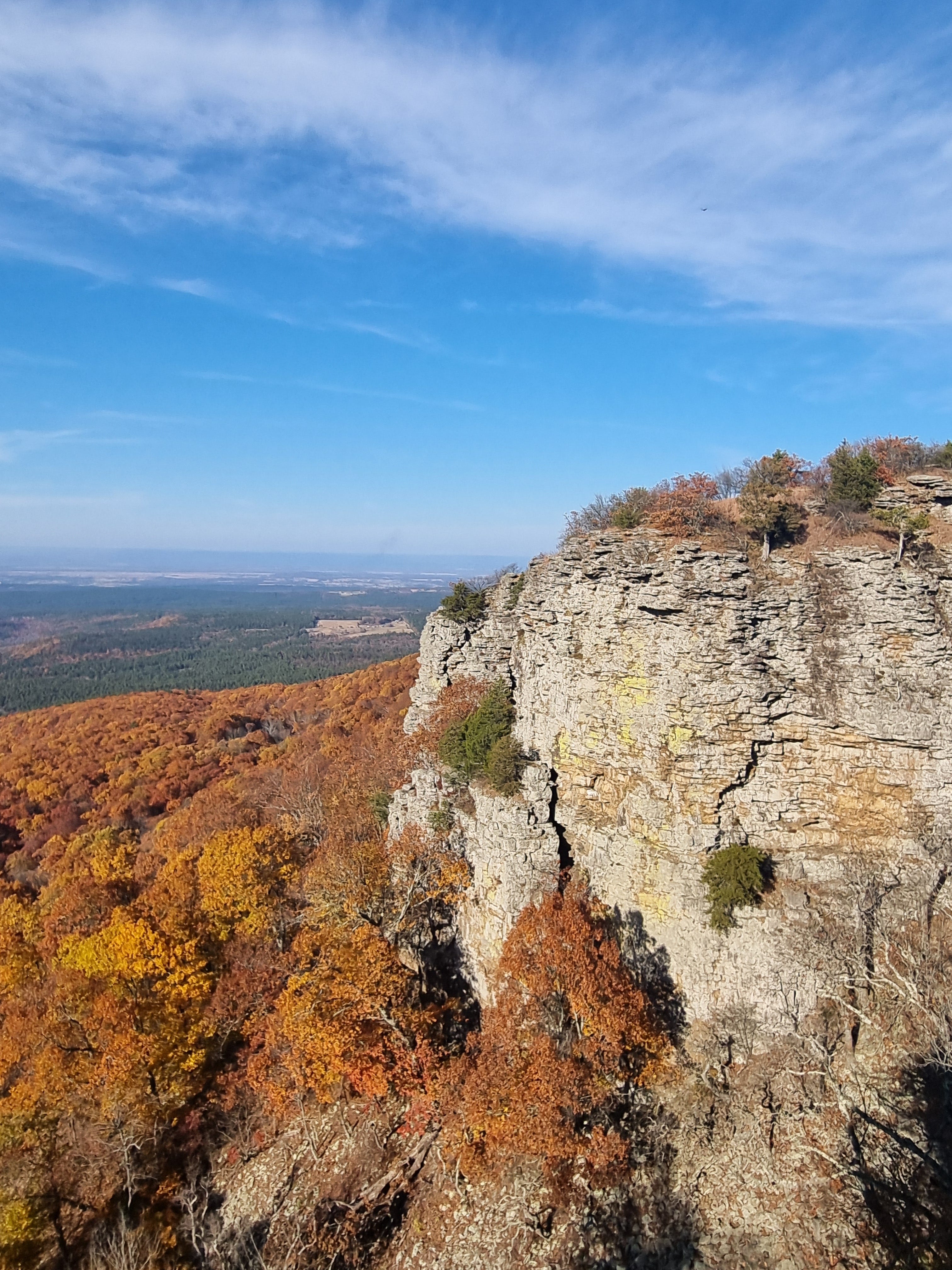
There’s something delightfully ironic about Arkansas’s highest point being called Mt. Magazine.
No, it’s not named after a publication (though it certainly deserves a spread in National Geographic), and yes, you’ll have to climb higher than your reading pile to get there.
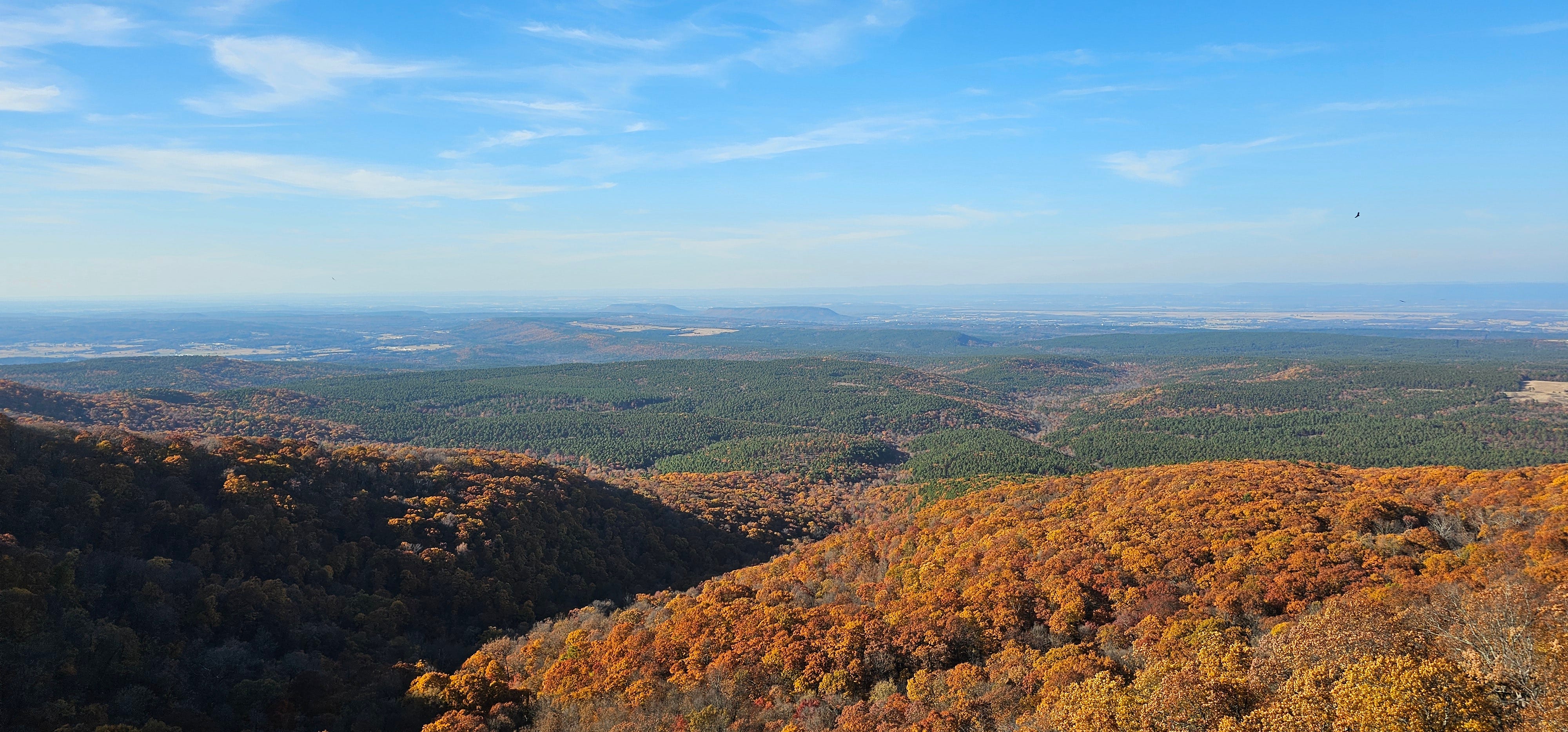
But if you’re looking for fall colors that’ll make your Instagram followers question whether you’ve discovered Photoshop, Mt. Magazine State Park is your ticket to stunning fall glory; and there is no filter required!
Mt. Magazine stands as the highest point between the Rockies and the Appalachians at 2,753 feet above sea level.
That’s right: if you’re standing on this summit in October, you’re literally on top of the world for hundreds of miles in any direction. Take that, flat-landers!
A Mountain by Any Other Name
The History Behind the Height
Before we get to the leafy fall goodness, let’s talk about how this geological giant got its peculiar name.
The mountain’s moniker doesn’t come from glossy publications or subscription cards falling out everywhere (thank goodness).
Instead, it’s likely derived from the French word “magasin,” meaning storehouse.
Makes sense when you consider that early settlers and Native Americans used the mountain’s caves and overhangs as natural storage facilities.
The area has been drawing visitors for centuries, though the ancient ones probably weren’t as concerned with getting the perfect panoramic shot for social media.
The Caddo, Osage, and Quapaw peoples knew this land long before European settlers arrived, and the mountain served as a landmark for travelers navigating the Arkansas River Valley below.
By the 1930s, the Civilian Conservation Corps had built infrastructure on the mountain, and in 1987, Mt. Magazine finally achieved its destiny as a state park.
Today, it’s one of Arkansas’s premier outdoor destinations, and in fall, it is nothing short of spectacular.
Why Fall at Mt. Magazine Hits Different
The Science of Stunning
Here’s the thing about elevation and the fall season: they’re best friends. Mt. Magazine’s height means cooler temperatures arrive earlier and linger longer, giving you an extended window to catch peak foliage.
While your neighbors down in the valley are still sweating through the fall months, you’ll be up here wrapped in a cozy flannel, watching the leaf show unfold.
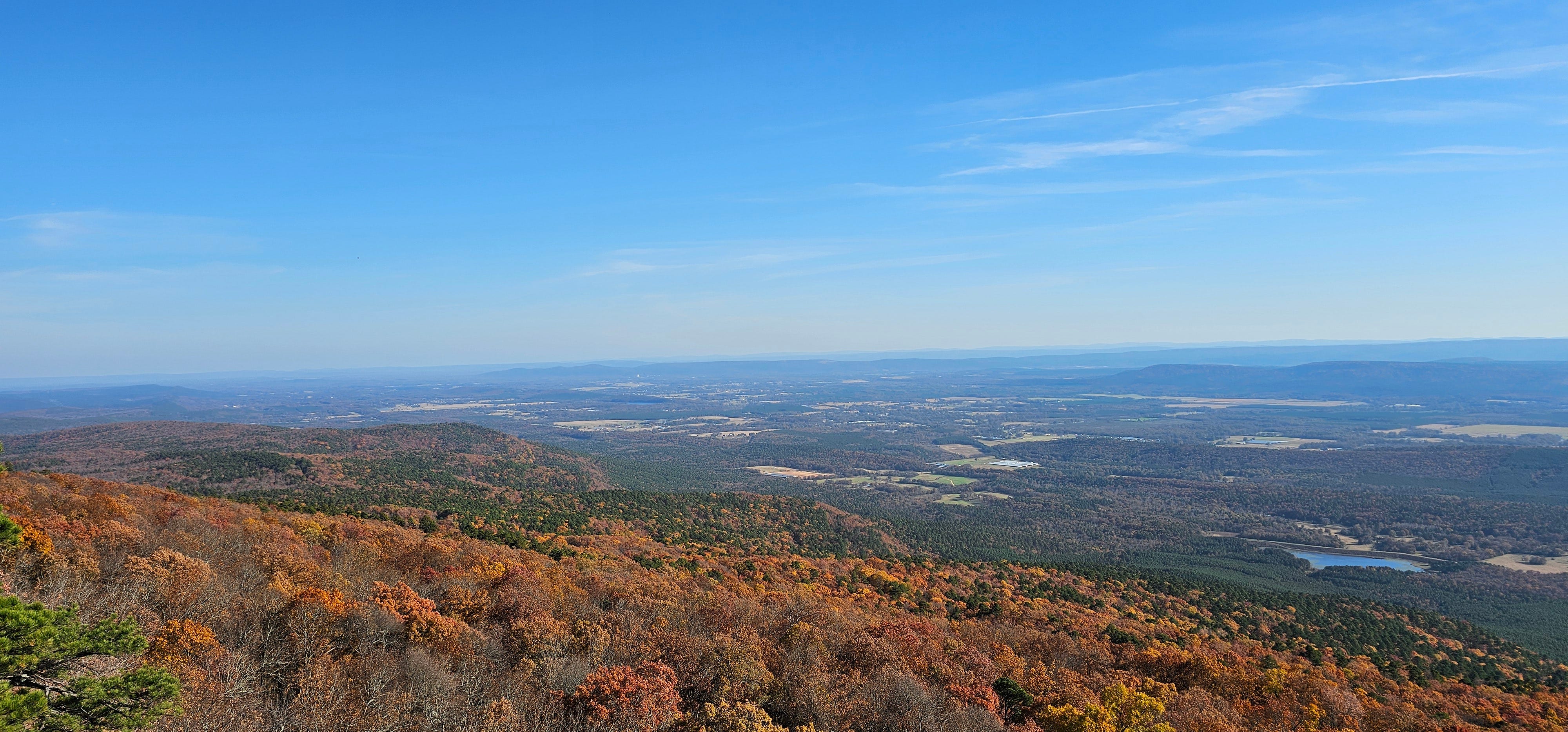
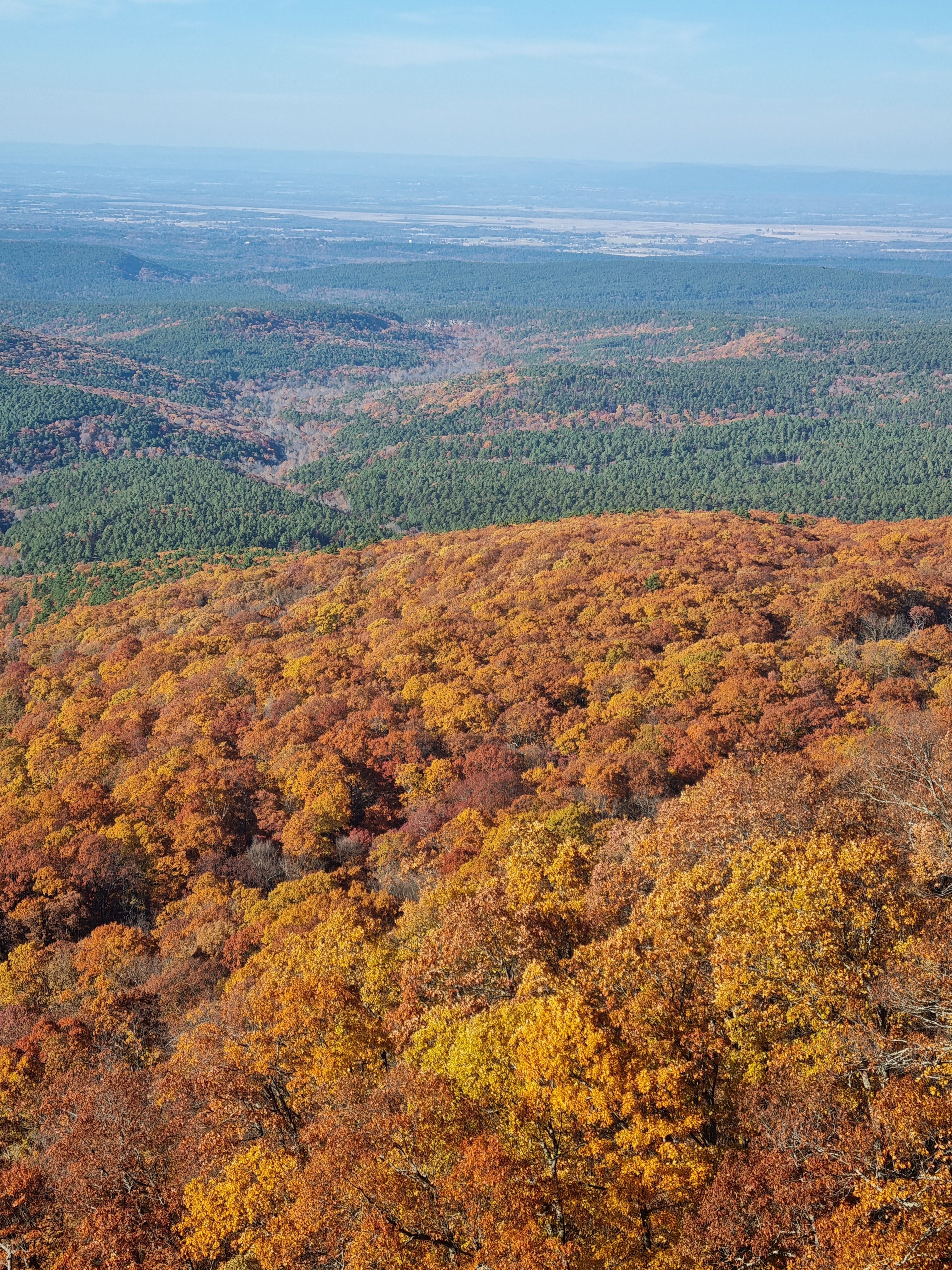
The mountain’s diverse ecosystem creates a painter’s palette of fall colors:
Hickories and oaks dominate the landscape, turning rich golds and burnt oranges
Maples add splashes of crimson and scarlet that look almost unreal
Sweetgums contribute deep purples and burgundies to the mix
Dogwoods provide burgundy accents in the understory
Sumacs go full drama queen with their brilliant reds
Peak season typically runs from mid-October through early November, though Mother Nature doesn’t exactly operate on a published schedule. (and she’s notoriously bad at returning emails! 😏 )
What Makes Mt. Magazine Worth the Drive
Beyond the Leaves
The fall colors are the headliner, but Mt. Magazine offers plenty of supporting acts that make it worth more than a quick photo op stop:
The Lodge: Mt. Magazine Lodge sits right at the summit, offering floor-to-ceiling windows that frame the fall display like living artwork. You can sip your morning coffee while watching fog roll through the valleys below, and yes, it’s exactly as meditative as it sounds. The lodge features modern amenities wrapped in a rustic aesthetic—think “cozy cabin meets boutique hotel.”
The Views: On a clear day, you can see for up to 40 miles from various overlooks. Signal Hill, Cameron Bluff Overlover, and the Skydiving Platform each offer different perspectives on the surrounding valleys, cliffs, and, of course, that glorious fall canopy stretching to the horizon.
The Trails: Over 16 miles of hiking trails wind through the park, ranging from easy strolls to more challenging scrambles. The 2.5-mile Signal Hill Trail is a fall favorite, offering panoramic views with a moderate effort level. For those who prefer their leaf-peeping with a side of adrenaline, the park also features hang gliding and rock climbing opportunities.
Planning Your Fall Pilgrimage
Practical Matters (Yes, We Must)
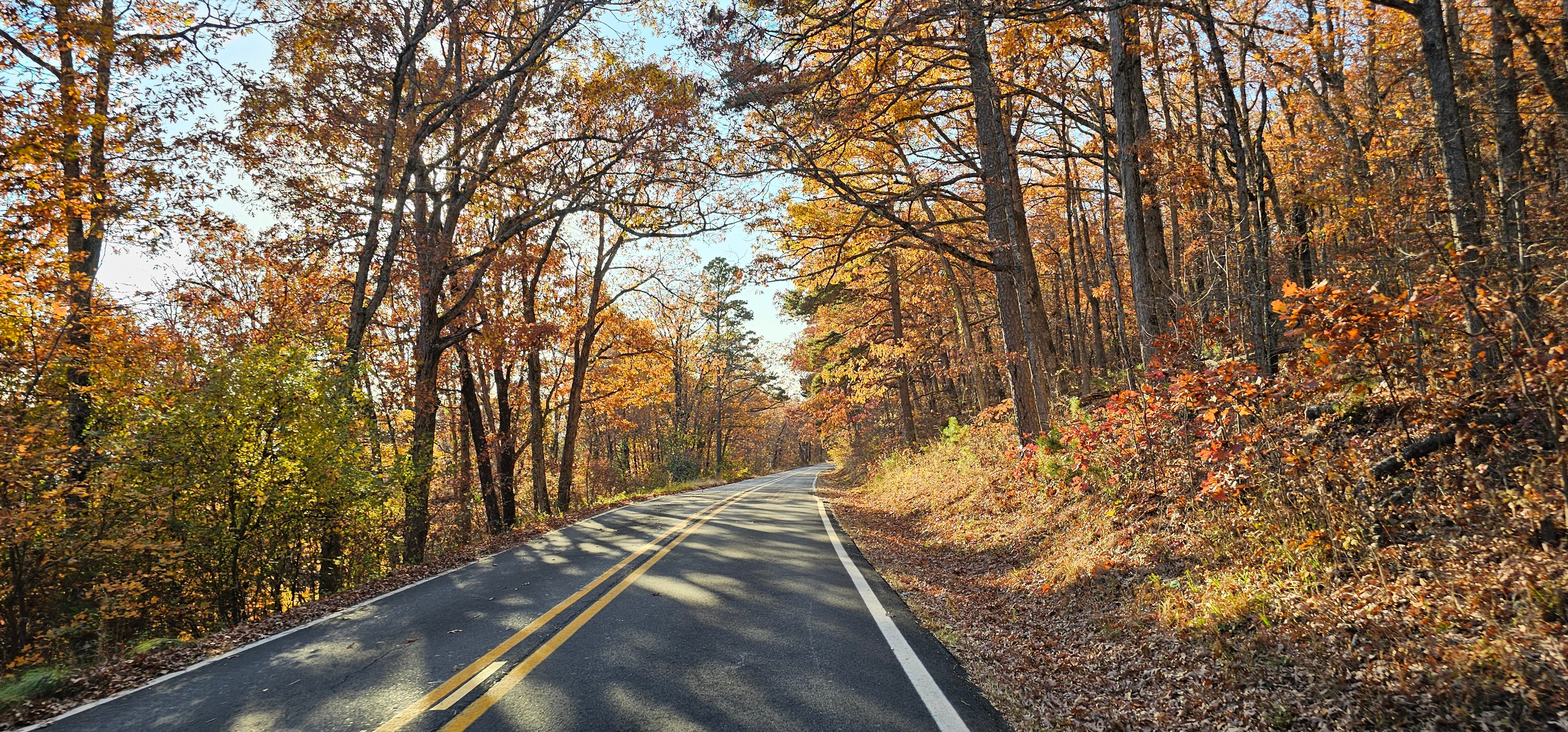
Getting to Mt. Magazine requires a scenic drive through the Arkansas River Valley, which is really just bonus fall color viewing.
The park is located about 90 miles west of Little Rock and 75 miles east of Fort Smith, making it an easy weekend escape from either direction.
Best Times to Visit:
Weekdays are less crowded (shocking)
Early morning offers the best light for photography and potential fog displays in the valleys
Sunset from the summit is magical but popular so arrive early for parking
What to Bring:
Layers! The summit is consistently 5-10 degrees cooler than the valley
Good walking shoes if you want to explore
Camera or phone with plenty of storage (you’ll take more photos than you think)
Binoculars for wildlife spotting (black bears, white-tailed deer, and over 100 bird species call this area home)
The Bottom Line (From the Top of Arkansas)
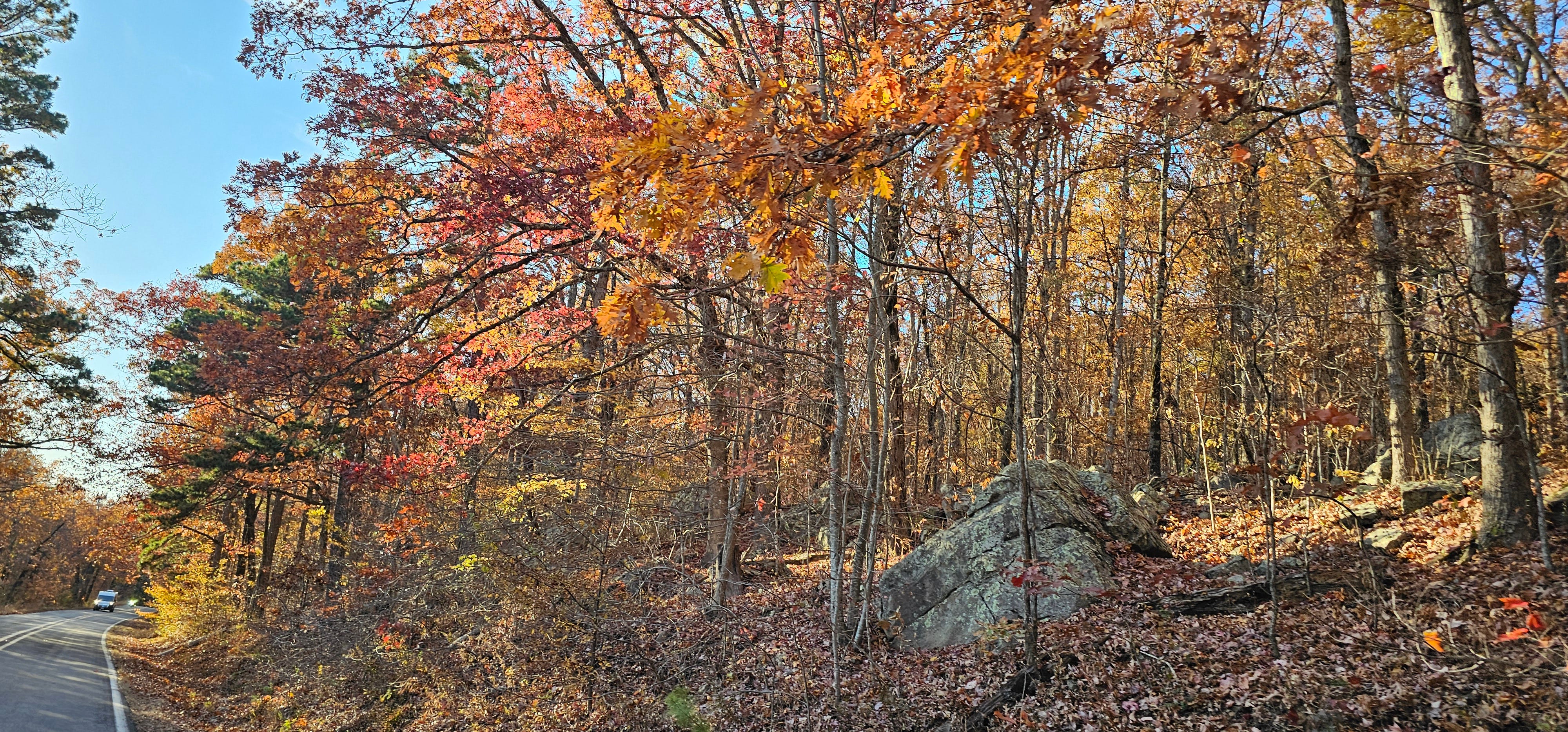
Mt. Magazine in fall is one of those rare places that actually lives up to the hype.
Whether you’re a serious outdoor enthusiast, a casual hiker, or someone who just really likes nature and the color orange (no judgment), this mountain delivers.
The combination of Arkansas’s highest elevation, diverse hardwood forests, and panoramic views creates a fall experience that rivals anywhere in the region.
Plus, when someone asks what you did last weekend, being able to say “Oh, I hung out at the highest point between two mountain ranges” sounds infinitely cooler than “I stayed home and watched Netflix.”
So grab your warm winter flannel, charge your camera, and point your GPS toward Paris, Arkansas (and yes, they have an Eiffel Tower replica).
Mt. Magazine is standing patiently, waiting to remind you why they call Arkansas the Natural State, one spectacular leaf at a time.
Mt. Magazine State Park is open year-round. For current conditions, trail status, and lodge reservations, visit ArkansasStateParks.com or call (479) 963-8502.